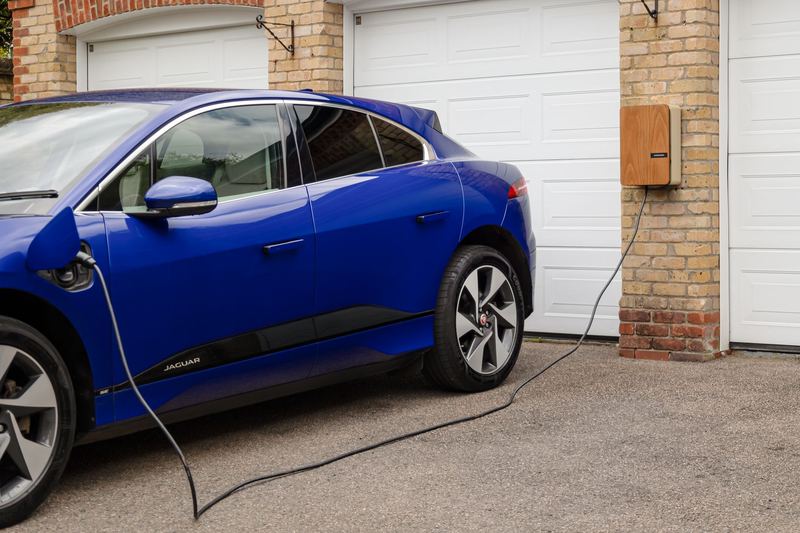
These are the two jobs Raleigh homeowners are asking about most, and they share a problem: both add a large, continuous load to a panel that was sized for a house without one. This guide covers what each one needs, what the code requires, and how to find out whether your service can take it before you buy the equipment.
Craver Electric installs Level 2 EV charger circuits and generator transfer switches in Raleigh and Wake County homes. Hardwired or receptacle chargers, load calculations before the equipment is bought, manual transfer switches and interlocks for portable generators, automatic transfer switches for standby units. Every circuit permitted and inspected. Request a written quote.
Below is the homeowner's guide to both jobs, so the quote you get, from us or anyone else, makes sense.
Part one: EV chargers
Level 1 versus Level 2
Level 1 charging is the cord that came with the car plugged into an ordinary 120 volt outlet. It works, it needs no electrician, and it is slow. For a lot of commuters it is enough.
Level 2 is a 240 volt circuit, the same kind that feeds an electric dryer or range, with a wall-mounted charger or a heavy-duty receptacle on the end of it. It charges several times faster and it is the reason most people call an electrician.
What a Level 2 circuit needs
- A dedicated circuit. The charger gets its own breaker and its own wire from the panel. It does not share with the dryer.
- The right breaker size for the charger. EV charging is treated as a continuous load, so the circuit is sized above the charger's actual draw. A charger set to pull 40 amps needs a 50 amp circuit; a 48 amp charger needs a 60 amp circuit. The charger's manual states its requirement.
- The right wire for the run. Panel in the basement, charger in the detached garage: the length of the run and the route it takes decide the wire size and whether conduit is needed.
- A hardwired charger or a receptacle. Hardwired is cleaner and is required for some higher-amperage units. A receptacle lets you take the charger with you. Either can be done to code.
- GFCI protection where required. A receptacle in a garage needs it. The rules for hardwired units differ. Your electrician will know which applies.
Does your panel have room
This is the question to answer before buying a charger, and it has two parts. First, physical space: is there a free double-pole slot? Second, and more important, capacity: does the service have the headroom for another 40 to 60 amps of continuous load on top of the house?
A 200 amp service usually does. A 100 amp service in a house with electric heat and an electric water heater often does not. The honest answer comes from a load calculation, which is arithmetic based on your square footage and appliances. If the numbers do not work, the options are a smaller charger set to a lower amperage, a load management device that throttles the charger when the house is busy, or a service upgrade.
A charger does not fix a panel. If someone quotes you a Level 2 install on a 100 amp panel with no load calculation and no conversation about capacity, ask why. The charger will work on day one. The problem shows up in January when the heat strips and the car are running at the same time.
Permits
A new 240 volt circuit requires an electrical permit and inspection, through the City of Raleigh inside city limits or Wake County outside them. The permit is pulled under the contractor's license. Ask for the permit number. It is also what protects you if the charger ever has a problem and the manufacturer or your insurer asks whether it was installed to code.
Part two: standby generators
Portable versus standby
A portable generator sits in the yard, gets fueled by hand, and powers a few circuits through cords or through a manual transfer switch. A standby generator is permanently installed, runs on natural gas or propane, and switches on by itself when the power drops.
Either one, if it is going to feed the house's wiring rather than an extension cord, needs a transfer switch. That is not optional.
Why the transfer switch matters
A transfer switch physically separates your house from Duke Energy's lines while the generator is running. Without it, generator power can flow backward through the meter and onto the utility lines, which is called backfeeding. It can kill a line worker restoring service on your street, and it is illegal for exactly that reason. It also means that when utility power comes back, it meets your generator head-on.
For a portable generator, the accepted solutions are a manual transfer switch or a listed interlock kit on the panel that makes it impossible to have the main breaker and the generator breaker on at the same time. For a standby unit, an automatic transfer switch does the job without you touching anything.
What a standby installation involves
- A concrete or composite pad, placed to meet clearance rules from windows, doors and property lines, and far enough from the house for exhaust.
- The gas line, run by a licensed plumber or gas fitter, sized for the generator's demand.
- The automatic transfer switch, wired between the meter and the panel, or a separate panel of essential circuits if the generator is sized for part of the house.
- Electrical and, in most cases, mechanical permits and inspections.
Whole-house versus essential-circuits is the main decision. Backing up everything needs a larger generator and often a larger gas line. Backing up the refrigerator, the well pump, the furnace blower, a few lights and the internet needs a much smaller unit. Most homeowners are happier with the second option once they see the difference in price.
Carbon monoxide
Generators produce it, and every year people die running a portable unit in a garage or close to an open window. A standby unit is placed for this on purpose. A portable one should never run indoors, in a garage with the door open, or near a window or vent. Put a carbon monoxide alarm in the house if you own a generator of any kind.
Questions to ask for either job
- Will you do a load calculation before recommending the size?
- Is the permit included, and who pulls it?
- What breaker and wire size are you installing, and why that size?
- For a generator: which transfer switch, and is the gas work included or separate?
- What is the license number on the quote?
Ready for a written price? Describe what the house is doing on the quote form and you will hear back the same business day.